
 View full size ↗
Keep the balance clear
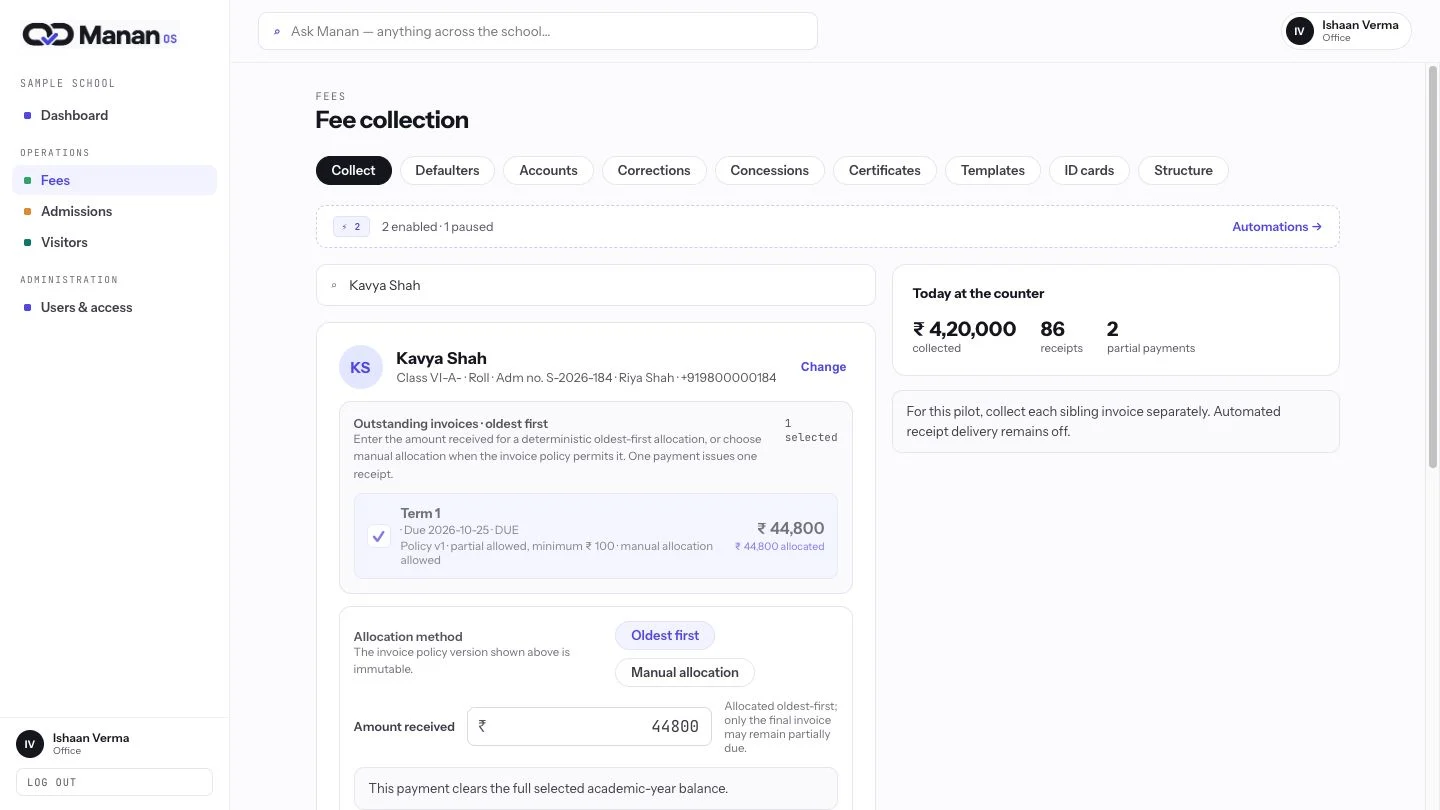
A collection starts with the student’s outstanding invoices and their allocation policy. The desk sees what the amount covers and what remains before completing the record.
A collection starts with the student’s outstanding invoices and their allocation policy. The desk sees what the amount covers and what remains before completing the record.
Watch video 48 sec View full size ↗
A collection starts with the student’s outstanding invoices and their allocation policy. The desk sees what the amount covers and what remains before completing the record.
 View full size ↗
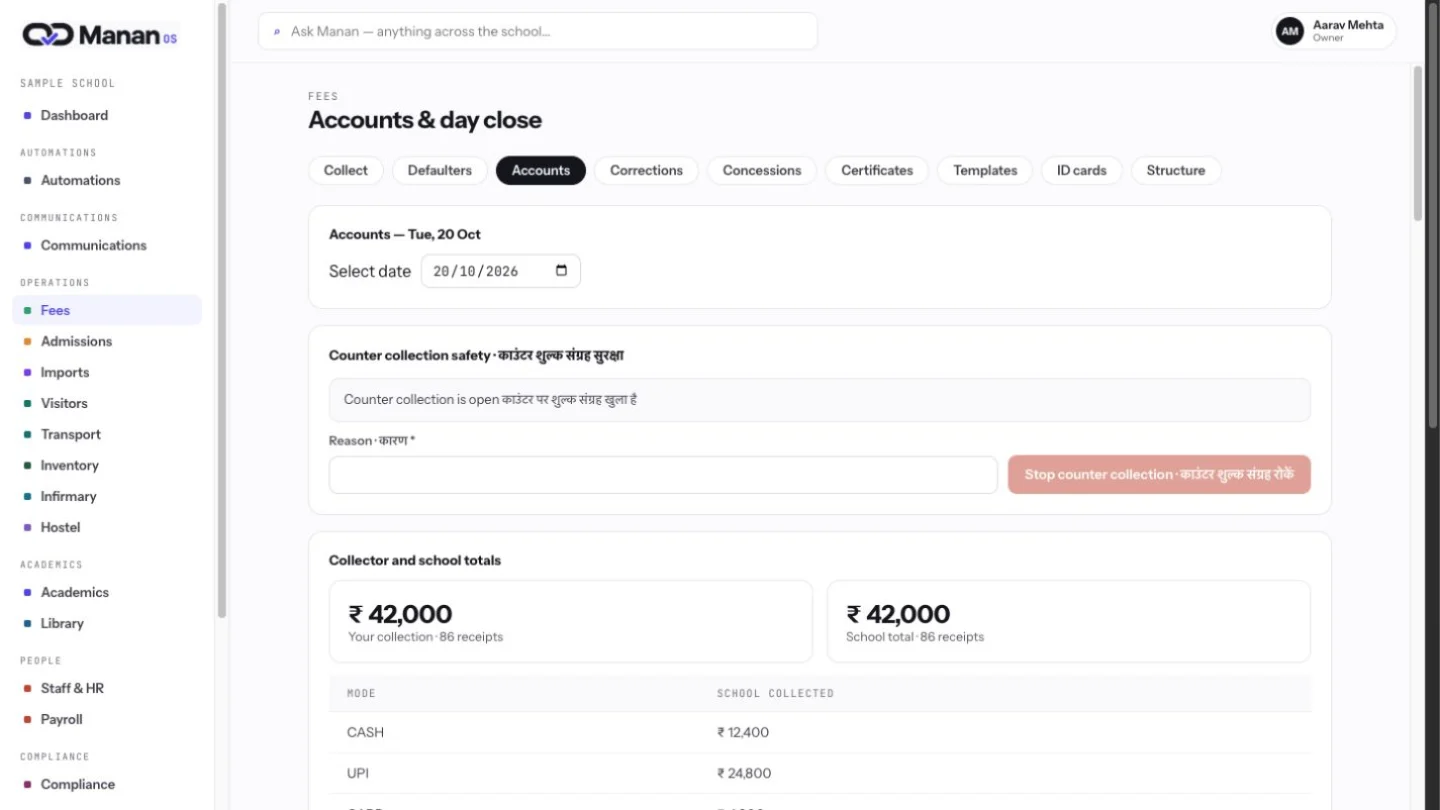
The accounts view carries collection evidence into day close. Staff can compare the recorded work with declared totals and keep the review step attached to the day.
 View full size ↗
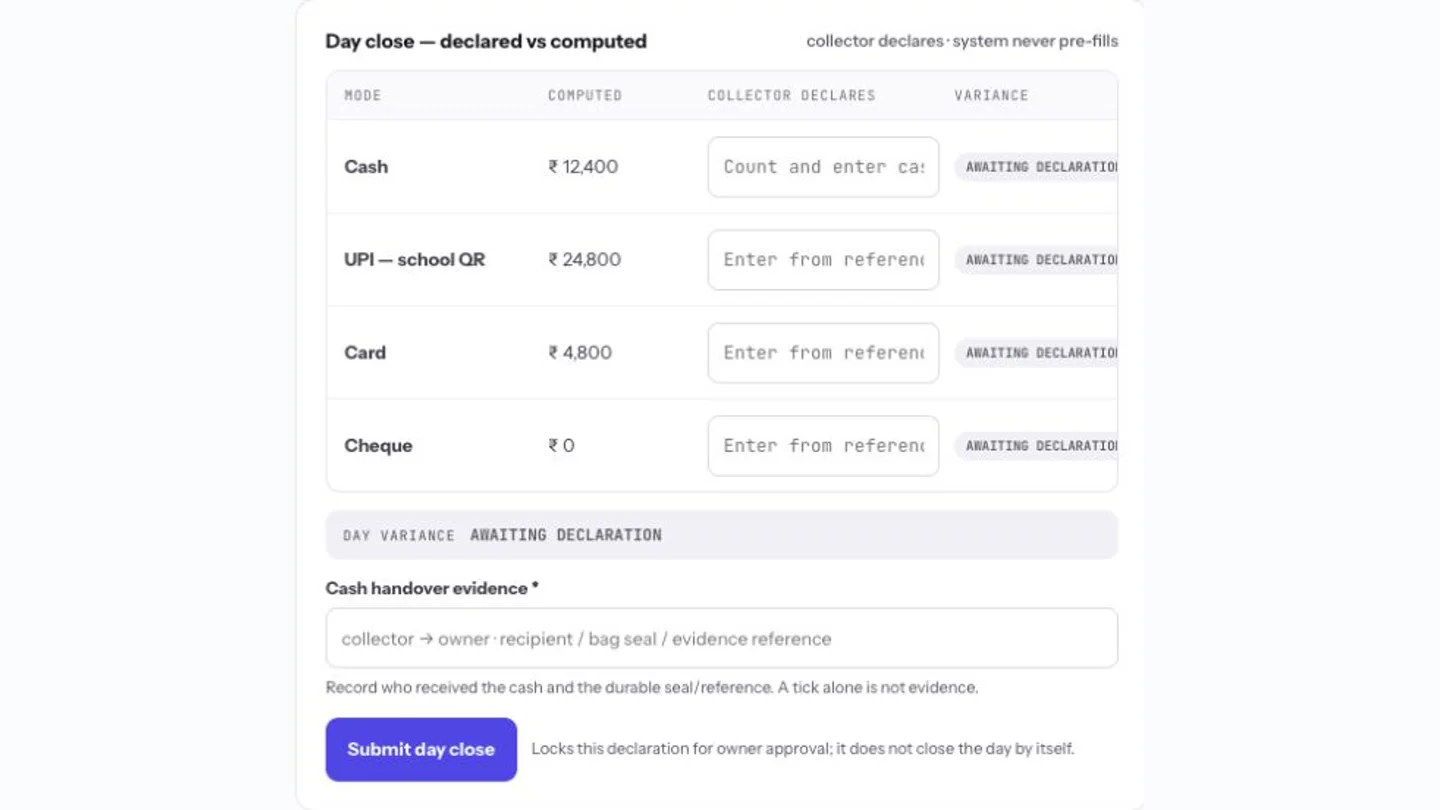
Compare computed payment totals with the collector’s own declaration. The form keeps cash handover evidence and owner approval in the same review boundary; this sample declaration has not been submitted.
 View full size ↗
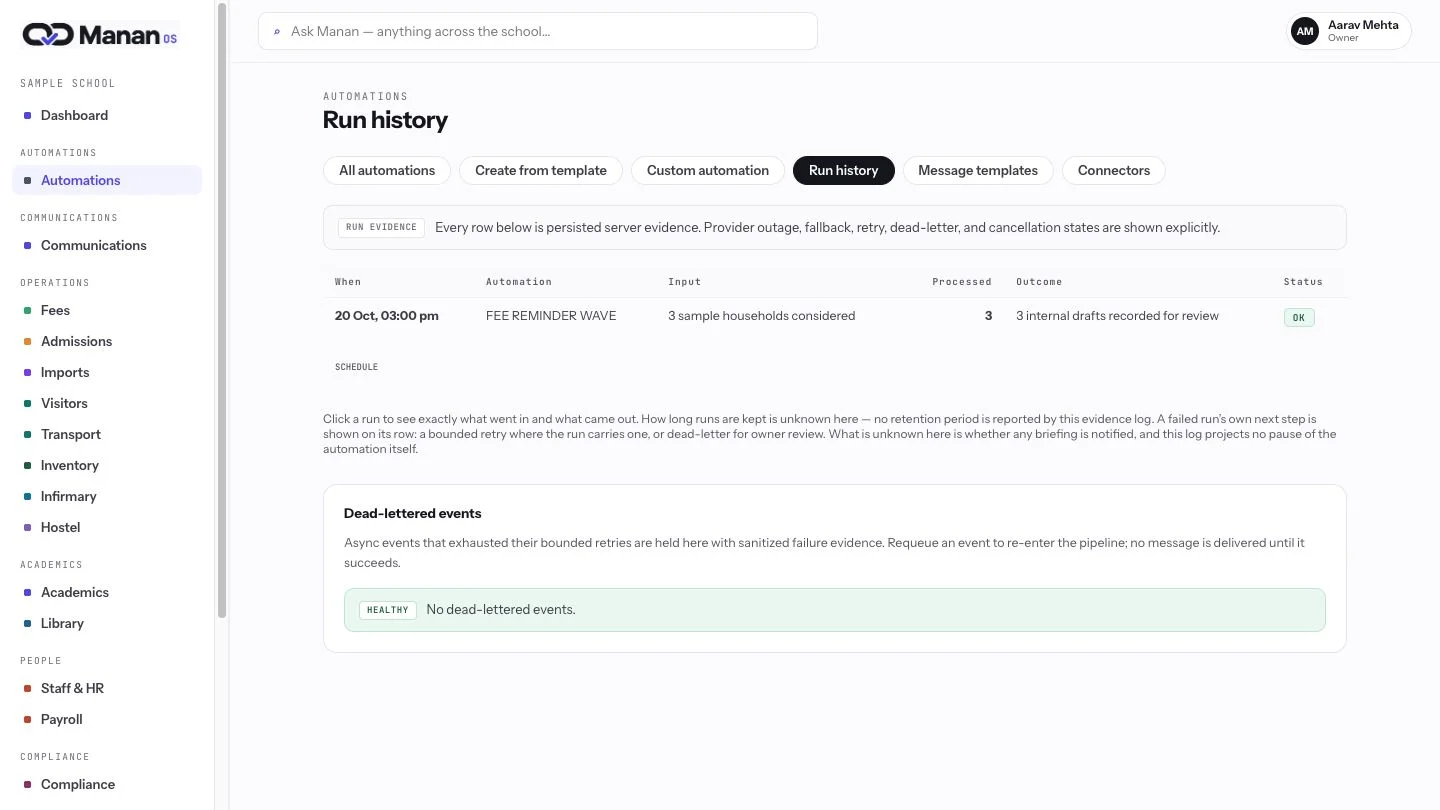
Automation run history keeps prepared work and its outcomes visible for inspection. The school can review the inputs and follow the evidence behind its internal drafts.
No payment is initiated and no financial correction records until an authorised reviewer approves it.
A correction must repair the present without erasing the financial fact that led to it.
The receipt starts as a durable fact.
The right person decides the precise change.
Declarations and handover remain reviewable.
A cited question prepares the next review.